
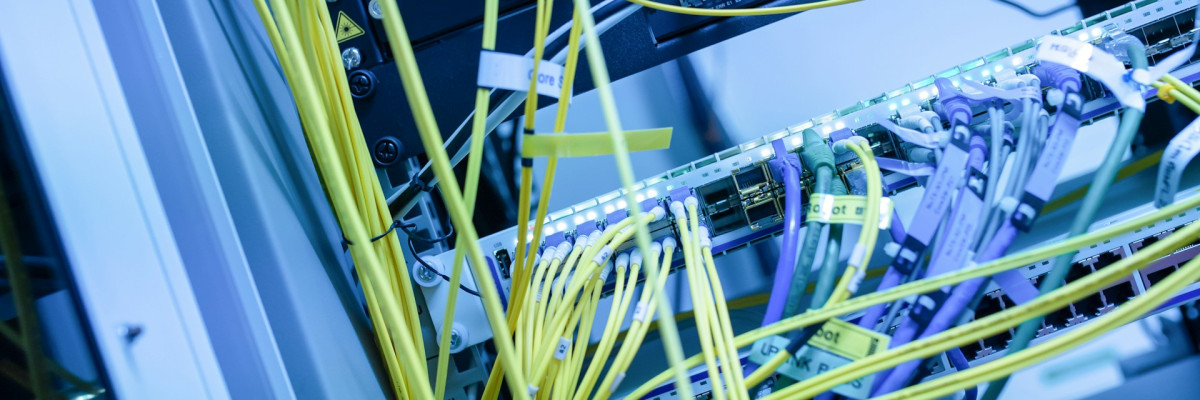
Fast fiber connections are no longer a luxury for businesses in Bangladesh. Cloud apps, IP cameras, online meetings, and VoIP calls all compete for bandwidth, and weak links slow everything down. One small part, the fiber-optic transceiver, quietly decides how fast and how stable your network really feels.
In this article, we will walk through how fiber-optic transceivers work, which types fit common setups in Bangladesh, and what to check before you buy. If you are planning upgrades for offices, campuses, factories, ISPs, or data centers, the right transceiver choice can make your network cleaner, quicker, and easier to grow.
Getting Faster, Cleaner Connectivity Across Bangladesh
Across Dhaka, Chattogram, and growing regional towns, more teams are working online all day. File sharing, ERP systems, HD CCTV streaming back to a control room, and remote support all add pressure on links that were once fine for basic email and browsing.
Fiber optic transceivers sit between your networking gear and the fiber cable. They plug into switches, routers, or servers and turn electrical signals into light pulses, then back again. If the transceiver is wrong for your setup, you can see:
- Higher latency on calls
- Random drops in IP camera feeds
- Slowdowns when multiple branches connect to a central office
Good transceiver choices help you get:
- Lower latency for VoIP and video meetings
- Fewer network outages and cleaner failover
- Smoother upgrades from 1G to 10G, 25G, or more over time
Understanding Fiber-Optic Transceiver Basics
A fiber-optic transceiver is a small module that plugs into a network port. On one side, it talks to your switch or server using electrical signals. On the other side it sends and receives light through fiber.
The main transceiver form factors you will hear about, include:
- SFP, usually for 1G links
- SFP+, often used for 10G
- QSFP and QSFP+, used for 40G and higher-density needs
- Newer formats that can support 25G, 50G, 100G and beyond
Choosing the right form factor depends on what your switch or router supports. Older access switches may only accept SFP, while newer core or data center switches might support SFP+ and QSFP for higher speeds.
You also need to match:
- Connector type, usually LC or SC
- Fiber type, single-mode or multimode
- Distance rating, short reach inside a building or long-reach across a city
In many Bangladesh offices and campuses, there is a mix of older multimode runs inside buildings and newer single-mode links between buildings. Matching the transceiver to the existing fiber plant avoids re-cabling and helps keep projects simpler.
Matching Transceivers to Real-World Bangladesh Networks
Networks in Bangladesh come in many shapes, but some patterns appear again and again. Small and medium offices need stable 1G or 10G links between floors. ISPs need higher-density ports in aggregation layers. Universities and factories stretch links across wide areas with outdoor fiber where heat and humidity are real concerns.
When choosing a fiber-optic transceiver in Bangladesh, think about:
- Distance, how far each link must run
- Port density, how many links you need per device
- Redundancy, how easily you can reroute traffic if a link fails
- Environment, where the hardware will sit, including temperature and air flow
For example:
- Branch to head office over metro fiber: Use long-reach single-mode transceivers that are rated for the full distance, with spares on hand for fast swap if needed.
- Upgrading a core switch from 1G to 10G: Move from SFP to SFP+ optics on uplinks and server connections, while keeping 1G at the access edge where it still makes sense.
- CCTV backbone for large sites: Use fiber transceivers that support the needed distance plus some safety margin so new cameras can be added later without redesign.
In hot, humid rooms with limited cooling, it helps to choose optics rated for higher operating temperatures and to plan space for airflow around equipment.
Key Specs That Make or Break Performance
The label on a transceiver is not just technical jargon. A few key lines decide if that module will run cleanly in your network.
Speed and protocol support come first. The transceiver must match:
- The Ethernet speed on the port, like 1G, 10G, 25G, 40G or 100G
- The standards your switch or router supports
- Any planned step-ups in the next few years
Optical parameters matter too:
- Wavelength, such as 850 nm for many multimode links or 1310/1550 nm for typical single-mode links
- Transmit and receive power levels, which need to match or overlap between two ends
- Distance rating, usually given as a maximum reach on a certain fiber type
If you mismatch fiber type or distance rating, you can see light levels that are too low or too high. That leads to errors, retries, and packet loss, even when the link appears to be up.
For Bangladesh conditions, it is also wise to check:
- Operating temperature range
- Humidity tolerance
- MTBF ratings and vendor reliability data
Good testing, warranties, and proper handling reduce the chance of failure during peak times like Eid sales, financial year-end, or heavy academic admission loads.
Cost, Compatibility, and Brand Choices
When selecting a fiber-optic transceiver in Bangladesh, many IT teams compare original equipment maker modules with compatible third-party options. Each path has trade-offs:
- OEM-branded optics can be tightly aligned to specific switches and firmware.
- Quality compatible optics can offer more flexibility across different vendors in mixed networks.
Total cost of ownership is not only the purchase price. It includes:
- Energy usage and heat output
- Likelihood of failure and the impact of link downtime
- Effort needed to test and approve modules in your environment
Planning ahead is key. If you expect to move from 1G access to 10G or 25G access, or from 10G uplinks to 40G or 100G links, it can be helpful to standardize around transceiver families and connector types that support a clear upgrade path.
How Crystal Vision Solutions Simplifies Your Choice
At Crystal Vision Solutions in Bangladesh, we focus on servers, networking, security, storage, and full enterprise infrastructure. Fiber optics are a big part of that picture, and transceivers are at the core of many upgrade plans.
Our team can help you:
- Review your existing fiber routes and patch panels
- Map out what your switches, routers, and servers currently support
- Align new transceivers with your growth plans for bandwidth and redundancy
We also support practical steps like pre-deployment testing and on-site help during installation. That way, you can check performance in real rooms with local power quality, heat, and humidity before rolling out across many branches.
Through a broad portfolio of optics, from entry SFP modules for smaller offices to higher-density QSFP solutions for ISPs and data centers, we work to keep choices clear and support available locally. This helps networks across Bangladesh stay faster, cleaner, and ready for the next round of upgrades.
Upgrade Your Network With Reliable High-Speed Connectivity Today
If you are planning a new deployment or upgrading existing infrastructure, we can help you choose the right fiber optic transceiver in Bangladesh for your performance and budget needs. At Crystal Vision Solutions, our team will walk you through compatibility, scalability, and future-proofing so your investment delivers long-term value. Share your project requirements and we will provide tailored product recommendations and clear pricing. To discuss details or request a quote, simply contact us today.
Leave a Comment