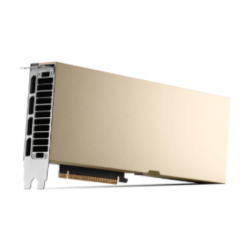
- GPU Architecture: NVIDIA Blackwell
- CUDA Cores: 24,064
- Tensor Cores: 5th Gen
- RT Cores: 4th Gen
- AI Performance: Up to 4 PFLOPS (FP4)
- Capacity: 32GB
- Type: GDDR7
- Bandwidth: 960 GB/s
- Power Consumption: Up to 300W
- Interface: PCIe 5.0 x16
- Capacity: 24GB
- Type: GDDR6 ECC
- Bandwidth: 300 GB/s
- Power Consumption: Up to 72W
- Interface: PCIe 4.0 x16
- Capacity: 48GB
- Type: GDDR6 ECC
- Bandwidth: 864 GB/s
- Power Consumption: Up to 300W
- Capacity: 48GB
- Type: GDDR6 ECC
- Bandwidth: 864 GB/s
- Power Consumption: Up to 350W
- Capacity: 96GB
- Type: GDDR7
- Bandwidth: 1.6 TB/s
- Power Consumption: Up to 450W
- Interface: PCIe 5.0 x16
- Capacity: 96GB
- Memory Type: GDDR7
- Bandwidth: Up to 1.8 TB/s
- Interface: PCIe Gen5
- CUDA Cores: 20,000+
- Capacity: 48GB
- Memory Type: GDDR7
- Bandwidth: Up to 1.3 TB/s
- Interface: PCIe Gen5
- CUDA Cores: 16000+
- Capacity: 32GB
- Memory Type: GDDR7
- Bandwidth: Up to 1.0 TB/s
- Interface: PCIe Gen5
- CUDA Cores: 12000+
-
li>Capacity: 24GB
- Memory Type: GDDR7
- Bandwidth: Up to 800 GB/s
- Interface: PCIe Gen5
- CUDA Cores: 10000+
- Capacity: 24GB
- Memory Type: GDDR7
- Bandwidth: Up to 800 GB/s
- Interface: PCIe Gen5
- CUDA Cores: 10000+
- Memory: 16GB GDDR7
- Memory Bandwidth: Up to 448 GB/s
- Power Consumption: 130W
- Interface: PCIe Gen5 x16
- GPU Architecture: NVIDIA Blackwell
- Memory: 48GB GDDR6
- Memory Bandwidth: Up to 960 GB/s
- Power Consumption: 300W
- Interface: PCIe Gen4 x16
- GPU Architecture: NVIDIA Ada Lovelace
- Memory: 32GB GDDR6
- Memory Bandwidth: Up to 672 GB/s
- Power Consumption: 250W
- Interface: PCIe Gen4 x16
- GPU Architecture: NVIDIA Ada Lovelace
- CUDA Cores: 12,800
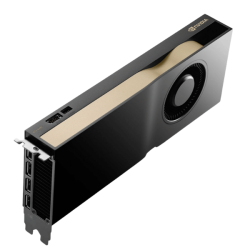
- Memory: 24GB GDDR6 ECC
- Memory Bandwidth: Up to 432 GB/s
- Power Consumption: 210W
- Interface: PCIe Gen4 x16
- GPU Architecture: NVIDIA Ada Lovelace
- Memory: 20GB GDDR6 with ECC
- Bandwidth: Up to 360 GB/s
- CUDA Cores: 6,144
- Tensor Cores: 4th Generation
- RT Cores: 3rd Generation
- Memory: 20GB GDDR6 with ECC
- Bandwidth: Up to 360 GB/s
- CUDA Cores: 6,144
- Tensor Cores: 4th Generation
- RT Cores: 3rd Generation
- Memory: 16GB GDDR6 with ECC
- Bandwidth: Up to 288 GB/s
- CUDA Cores: 2,816
- Tensor Cores: 4th Generation
- RT Cores: 3rd Generation
- Memory: 48GB GDDR6 ECC
- Bandwidth: Up to 960 GB/s
- Power: ~300W
- Interface: PCIe Gen 4 x16
- Architecture: Ada Lovelace
- Memory: 32GB GDDR6 ECC
- Bandwidth: Up to 768 GB/s
- Power Consumption: ~250W
- Interface: PCIe Gen 4 x16
AI GPU Cards in Bangladesh | Features & Buying Guide in Bangladesh
Artificial Intelligence is transforming how businesses process data, automate operations, and build intelligent applications. From generative AI and large language models (LLMs) to scientific computing and real-time analytics, organizations now require computing hardware capable of handling enormous workloads with exceptional speed and reliability. This growing demand has made AI GPU Cards one of the most important components of modern enterprise IT infrastructure.
Unlike traditional processors that execute tasks sequentially, AI GPUs are designed for massively parallel computing. They can perform thousands of calculations simultaneously, dramatically reducing the time required to train machine learning models, process complex datasets, render high-resolution graphics, and run AI inference. Whether developing enterprise AI solutions, building GPU-accelerated servers, or deploying private AI infrastructure, organizations rely on professional GPU accelerators to achieve higher performance, improved scalability, and greater operational efficiency.
As AI adoption accelerates across Bangladesh, industries such as banking, healthcare, education, manufacturing, telecommunications, engineering, media production, and government are investing in enterprise-grade AI hardware to support digital transformation initiatives. Businesses are increasingly deploying AI-powered applications for predictive analytics, intelligent automation, fraud detection, customer service, medical imaging, and advanced research. Selecting the right AI GPU has therefore become a strategic decision that directly impacts productivity, infrastructure scalability, and long-term return on investment.
At Crystal Vision Solutions, we supply genuine enterprise AI GPU cards from globally recognized manufacturers, including NVIDIA, AMD, and Intel. Our portfolio includes professional GPUs designed for AI training, deep learning, machine learning, GPU virtualization, high-performance computing (HPC), scientific research, and enterprise visualization. Whether you are building a powerful AI workstation, expanding a GPU server, or designing a large-scale data center, our experienced specialists can recommend solutions tailored to your workload, software ecosystem, and future growth plans.
This comprehensive guide explores everything you need to know about AI GPU Cards, including their architecture, enterprise features, practical applications, leading GPU series, deployment considerations, pricing factors, and expert buying recommendations.
This comprehensive guide explores everything you need to know about AI GPU Cards, including their architecture, enterprise features, practical applications, leading GPU series, deployment considerations, pricing factors, and expert buying recommendations. Whether you are an AI startup, research laboratory, university, cloud provider, system integrator, or enterprise organization, Crystal Vision Solutions is your trusted partner for building reliable and future-ready AI infrastructure in Bangladesh.
What Are AI GPU Cards?
Artificial Intelligence (AI) workloads demand significantly more computing power than conventional business applications. Tasks such as training neural networks, processing billions of data points, generating AI-powered content, and running advanced simulations require hardware capable of executing massive numbers of mathematical operations simultaneously. This is where AI GPU Cards play a critical role.
An AI GPU Card is a high-performance computing accelerator specifically designed to handle parallel processing workloads. Unlike a Central Processing Unit (CPU), which typically contains a limited number of processing cores optimized for sequential operations, a Graphics Processing Unit (GPU) incorporates thousands of smaller cores that work together to perform multiple calculations concurrently. This architecture enables AI GPUs to process complex algorithms much faster, making them the preferred choice for machine learning, deep learning, scientific computing, and high-performance enterprise applications.
Enterprise AI GPU cards differ considerably from consumer gaming graphics cards. While gaming GPUs focus on rendering realistic graphics and maintaining high frame rates, enterprise GPUs prioritize computational accuracy, reliability, long-term stability, and continuous operation. They are engineered for mission-critical environments where systems may operate around the clock in AI workstations, GPU servers, cloud platforms, and enterprise data centers.
Modern AI GPU cards incorporate specialized technologies that accelerate artificial intelligence workloads. Features such as Tensor Cores optimize neural network computations, while large VRAM capacities enable AI models to process larger datasets efficiently. High-bandwidth memory technologies improve data transfer rates, PCI Express (PCIe) provides fast communication between system components, and high-speed interconnects such as NVLink allow multiple GPUs to work together for distributed AI training.
- Machine Learning (ML)
- Deep Learning (DL)
- Large Language Models (LLMs)
- Computer Vision
- Natural Language Processing (NLP)
- Generative AI
- Scientific Computing
- High-Performance Computing (HPC)
- Professional Rendering
- Engineering Simulation
- AI Inference
- Data Analytics
Why AI GPU Cards Are Essential for Modern Businesses
Artificial Intelligence is no longer limited to research laboratories or large technology companies. Today, organizations of every size are using AI to automate operations, improve decision-making, enhance customer experiences, and gain valuable insights from data. As AI applications become more sophisticated, the demand for high-performance computing continues to grow. Enterprise AI GPU Cards provide the computational power needed to process complex AI workloads efficiently, enabling businesses to innovate faster while reducing infrastructure limitations.
Unlike traditional CPU-based systems, AI GPUs can execute thousands of parallel operations simultaneously. This capability dramatically accelerates machine learning, deep learning, data analytics, and scientific computing, allowing organizations to process larger datasets and deploy AI models with significantly lower latency. Whether building an on-premises AI cluster or expanding cloud-based infrastructure, enterprise GPUs have become the foundation of modern AI computing.
Accelerating Artificial Intelligence Development
Powering Machine Learning and Deep Learning
- Customer behavior analysis
- Sales forecasting
- Predictive maintenance
- Credit risk assessment
- Fraud detection
- Supply chain optimization
- Demand forecasting
- Intelligent recommendation systems
Supporting Large Language Models and Generative AI
The rapid adoption of Large Language Models (LLMs) has transformed how businesses create content, automate workflows, and interact with customers. AI assistants, enterprise chatbots, document analysis platforms, and intelligent search systems all depend on GPU acceleration to deliver fast and accurate responses.
Modern AI GPU cards are optimized to support demanding LLM workloads, including:
- ChatGPT
- Claude
- Gemini
- Llama
- DeepSeek
- Enterprise AI Assistants
Beyond text generation, GPUs also power generative AI applications capable of producing images, videos, audio, software code, and digital content. These technologies are helping organizations improve productivity while reducing repetitive manual tasks across marketing, software development, engineering, and customer support.
Transforming Healthcare and Life Sciences
Healthcare organizations are increasingly adopting AI to improve diagnostic accuracy, accelerate research, and enhance patient care.
Enterprise AI GPUs support applications such as:
- Medical image analysis
- Disease prediction
- Drug discovery
- Genomic research
- Clinical decision support
- Radiology automation
- Personalized treatment planning
GPU-accelerated AI enables healthcare professionals to process complex medical datasets more efficiently, leading to faster diagnoses and improved treatment outcomes.
Strengthening Financial Services
- Fraud detection
- Anti-money laundering (AML)
- Credit scoring
- Algorithmic trading
- Portfolio optimization
- Customer analytics
- Financial forecasting
- Risk management
Driving Smart Manufacturing
- Predictive maintenance
- Automated quality inspection
- Industrial robotics
- Production planning
- Inventory optimization
- Supply chain analytics
- Digital twin simulation
- Equipment monitoring
Enhancing Retail and Customer Experience
- Personalized product recommendations
- Demand forecasting
- Dynamic pricing
- Customer segmentation
- Inventory management
- Intelligent search
- Visual product recognition
- Automated customer support
Advancing Scientific Research and Higher Education
- Climate modeling
- Computational chemistry
- Bioinformatics
- Genomic sequencing
- Physics simulations
- Engineering analysis
- Astronomy research
- High-performance computing (HPC)
Enabling Intelligent Government Services
- Smart city development
- Traffic management
- Disaster response planning
- Public safety monitoring
- Identity verification
- Border security
- Citizen service automation
- Data-driven policy analysis
Supporting Cloud Providers and Enterprise Data Centers
- GPU virtualization (vGPU)
- AI-as-a-Service (AIaaS)
- Virtual Desktop Infrastructure (VDI)
- Multi-tenant cloud environments
- AI inference platforms
- Containerized AI workloads
- High-density GPU servers
- Resource sharing across teams