Buy the RH8100 V3 Rack Server Huawei FusionServer
Huawei new-generation
Huawei FusionServer RH8100 V3 flagship rack server delivers industry-leading architecture to provide robust computing performance and extensibility, it is ideal for mission-critical applications with superb performance. This 8U rack server supports up to 8 Intel Xeon E7-8800 series processors, 192 DIMMs, 24*2.5” SAS/SATA disks, 18 PCIe 3.0 slots, and 2 LOM mezzanine cards, 8 hot-swappable fan modules in N+ 1 redundancy and 4 hot-swappable power modules, the modularity design and fault diagnosis LCD touch panel provide simple and tool-free maintenance. Huawei Hi11710 BMC chip build-in provides comprehensive remote device management, monitoring, configuration, and fault locating and analysis.
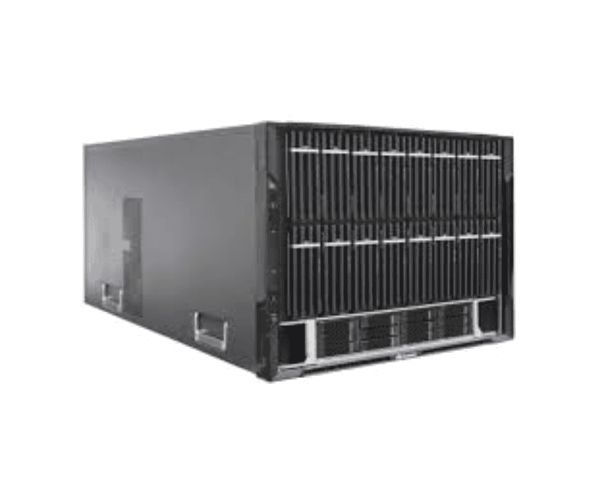
Figure 1 shows the appearance of the Huawei FusionServer RH8100 V3 Rack Server. The RH8100 V3 provides three front I/O modules:
Figure 1-1 shows the RH8100 V3 with the FM-A.
The front I/O module of model A (FM-A) provides performance-balanced configuration. The FM-A supports a maximum of 12 SAS HDDs, SATA HDDs, or SSDs, two RAID controller cards, and six standard PCIe slots on PCIe riser cards. The PCIe slots do not support standard cards that need to connect to external cables, such as, NICs, HBAs, IBs. You can install PCIe SSDs and GPUs in the slots.
Figure 1-2 shows the RH8100 V3 with the FM-B.
The front I/O module of model B (FM-B) provides storage-enhanced configuration. The FM-B supports a maximum of 24 SAS HDDs, SATA HDDs, or SSDs and two RAID controller cards. It does not support standard PCIe slots.
Figure 1-3 shows the RH8100 V3 with the FM-C.
The front I/O module of model C (FM-C) provides low-level configuration. The FM-C supports a maximum of eight SAS HDDs, SATA HDDs, or SSDs and two RAID controller cards. It does not support standard PCIe slots.
Figure 1-4 shows the RH8100 V3 with the FM-D.
The front I/O module of model D (FM-D) supports NVMe PCIe SSDs. The FM-D supports a maximum of eight SAS HDDs, SATA HDDs, SSDs, or NVMe PCIe SSDs and two RAID controller cards, but does not support standard PCIe slots. NVMe PCIe SSDs do not support RAID. If NVMe PCIe SSDs are installed in all disk slots, no RAID controller cards need to be configured on the server.



-70x60h.png "Huawei 1288H V5 Server with 4110 Processor, 16GB DDR4, 1200GB 10K SAS, SR150-M Raid Card, 550W PS")


-70x60h.png "Huawei PAC2000S12-TE 2000W 80 PLUS Titanium Server Power Module")

-1-70x60h.png "Huawei FusionServer RH5885 V3 Rack Server")