
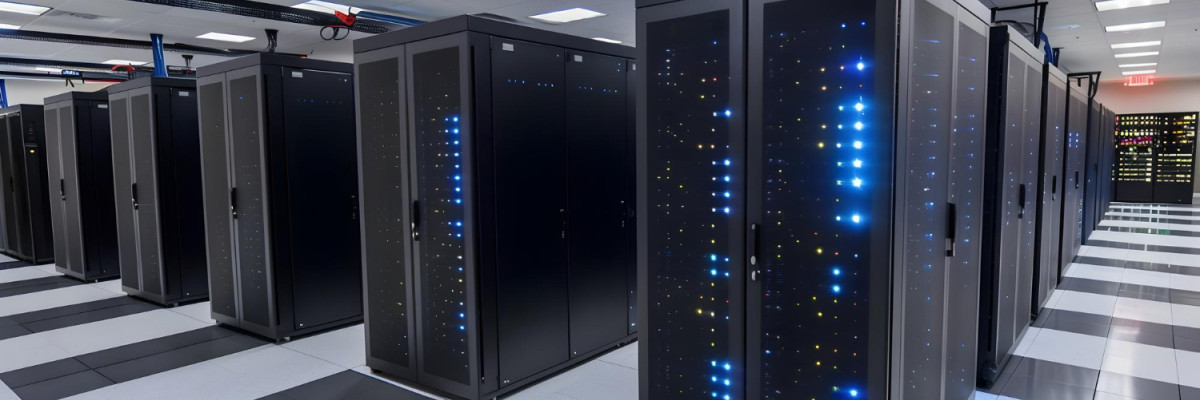
Building a Future-Ready Rack Strategy for Bangladesh’s Data Surge
Across Bangladesh, data rooms are filling up fast. E-commerce, mobile banking, fintech apps, and digital services are all growing at the same time. Each new app, each new customer, and each new transaction adds more data that has to live somewhere, run on something, and stay online all day and all night.
In the past, many teams would just buy a new rack when the old one was full. That ad hoc approach worked when growth was slow and expectations were simple. Today it is a different story. Workloads are piling up, uptime is expected, and power costs keep changing as we move toward Q2 2026. Random rack purchases now create messy rooms, hidden risks, and hard limits on how far you can grow.
Enterprise server racks are no longer just metal frames that hold boxes. They are the structural backbone for reliable, scalable, and secure IT. The right rack strategy supports higher density, smoother airflow, better cable routing, and safer access. It also has to fit the real-world limits we see every day in Bangladesh, from small rooms and low ceilings to mixed power and shared spaces.
At Crystal Vision Solutions, we work inside these Bangladesh-specific constraints all the time, so we think of racks as long-term building blocks, not one-time purchases.
Matching Enterprise Server Racks to High-Density Local Workloads
The first step is to understand how much you are asking each rack to carry, today and tomorrow. Many IT teams look at racks by how many units are free, but the real questions go deeper. How many servers will sit in a single rack as your projects grow? How many watts will each U draw as you add more cores, more memory, and more storage?
Instead of guessing, it helps to plan around workload growth. New VMs, growing databases, more analytics jobs, and new digital services all add to your density. Enterprise server racks must be chosen with this growth path in mind, not just the current list of devices.
Rack height matters. Taller racks can hold more, but they need enough ceiling space and a safe way to reach the top. Depth is just as important. Modern servers, especially high-density and blade systems, are often deeper than older gear. You want enough space so rails fit comfortably and there is room for power cables, network cables, and airflow behind the servers. Load capacity also matters so the rack can safely support dense compute and storage without bending or shaking.
Then there is cable management. In a dense rack, messy cables are more than an eyesore, they block airflow and slow down every maintenance task. Good rack designs support:
- Vertical cable channels
- Brush panels for clean cable pass-through
- Clear separation between power and data cables
With this, you get better airflow, fewer hotspots, and faster troubleshooting when something goes wrong.
Power, Cooling, and Uptime in a Challenging Infrastructure Environment
Power in Bangladesh is often a mix of grid, generator, and sometimes backup inverters. That means racks must support smart power planning. When you evaluate racks, think about how they work with intelligent PDUs. Can you mount full-length PDUs on the side? Is there space and mounting flexibility for redundant power strips?
Clear power paths are key. You want each critical server to have power feeds that are easy to follow, balanced across phases where needed, and simple to check during an outage. Enterprise server racks that support tidy, labeled power layouts make it easier to plan budgets for each rack and stay within the room’s total capacity.
Thermal management is just as important in our warm, humid climate. Dense compute nodes throw off a lot of heat. Racks should support front-to-back airflow, with perforated front and rear doors that match how your servers are designed to breathe. Blanking panels help block unused spaces so hot air does not loop around to the front.
If your data room uses hot or cold aisle layouts, racks must align with those patterns. That means consistent height and airflow direction, plus side panels that keep hot and cold air from mixing. Over time, these small details can reduce hotspots and protect sensitive equipment from heat stress.
For uptime, think about the physical events too. Seasonal storms, building vibrations, and heavy foot traffic all matter. Features like floor anchoring options, seismic bracing, secure casters with locks, and strong locking mechanisms on doors and side panels can all support better stability. Integration with UPS units and monitoring tools inside or beside the rack helps your team respond faster when power or temperature readings start to drift.
Security, Compliance, and Physical Access in Shared IT Spaces
As data becomes more sensitive, the rack itself is part of your security posture. Lockable front and rear doors help keep casual hands away from your core systems. Locking side panels reduce the chance of someone reaching around the back to unplug or remove something without permission.
In sectors like finance, government, healthcare, and large B2B services, compliance rules often require proof of who can touch what. Good rack design supports that by:
- Accepting access control systems or smart locks
- Providing places for tamper-evident seals
- Making it easier to separate workloads across different racks or cages
Policies matter here too. Clear labeling on racks, PDUs, and cable paths helps technicians work quickly without guessing. Defined rules on who can open which rack, and when, reduce mistakes and keep audit trails clean. In crowded rooms or shared data centers, simple, visible rules go a long way to protect uptime and security at the same time.
Planning for 5G, Edge, and AI: Future-Proofing Your Rack Investments
Bangladesh is moving toward more AI analytics, video surveillance, 5G edge nodes, and IoT projects. These workloads often mix different types of gear in the same rack: compact servers, storage arrays, network switches, edge gateways, and sometimes special AI accelerators.
To stay ready, racks should support flexible, modular layouts. That means adjustable rails so you can fit different depths, plenty of options for mounting accessories, and room for both horizontal and vertical cable organizers. As power density grows, racks also need to work with higher-capacity PDUs and the possibility of more advanced cooling solutions.
Scalability is not just about size, it is about staying open to change. When you pick enterprise server racks that can adapt to new power needs, new airflow patterns, and new types of gear, you avoid getting stuck as technology shifts.
Q2 2026 is a smart time for many Bangladesh businesses to review racks. There is a natural push before Eid sales, academic admission peaks, and fiscal-year IT rollouts. Aligning rack refresh projects with these cycles helps you add capacity before the pressure hits, instead of scrambling during busy periods.
Turning Evaluation Into Action with a Local Infrastructure Partner
When you put it all together, evaluating racks becomes clearer. The checklist often includes:
- Density and dimensions for current and future workloads
- Power and cooling design that matches local power and climate
- Security and compliance features for regulated or sensitive data
- Scalability for AI, 5G, IoT, and new application growth
To move from theory to action, many teams start with a site survey. That means measuring rooms, checking power feeds, noting airflow paths, and reviewing how people move through the space. From there, standardizing on a small set of rack models usually makes life easier. Spare parts, accessories, and cable plans all become simpler when your racks are consistent.
A phased migration from older, mixed racks to modern enterprise server racks can then follow. Often this is timed with hardware refresh cycles or application moves, so disruption is limited. Careful planning keeps services online while you upgrade the physical backbone that holds everything together.
Crystal Vision Solutions focuses on these practical steps for Bangladesh-based organizations. We bring local experience with tight rooms, mixed power, and growing digital workloads, and we help design rack strategies that support data-dense growth without chaos.
Upgrade Your Infrastructure With Reliable Enterprise Racks
If you are ready to modernize your data center, our enterprise server racks give you the flexibility, stability, and airflow your infrastructure needs. At Crystal Vision Solutions, we help you choose and configure rack solutions that fit your growth plans, not just your current hardware. Whether you want design guidance or a complete deployment strategy, we are here to support you from planning through installation. For tailored advice on your environment, contact us and speak with our team.
Leave a Comment